English
THE INSTITUTE OF STATE, LAW AND DEMOCRACY OF TURKMENISTAN
Azat SHAHERGELDIYEV,
The prosecutor of the Balkanabat city
of the Balkan velayat
Under the wise leadership of the esteemed President, Turkmenistan carries out effective activities in the field of environmental protection.
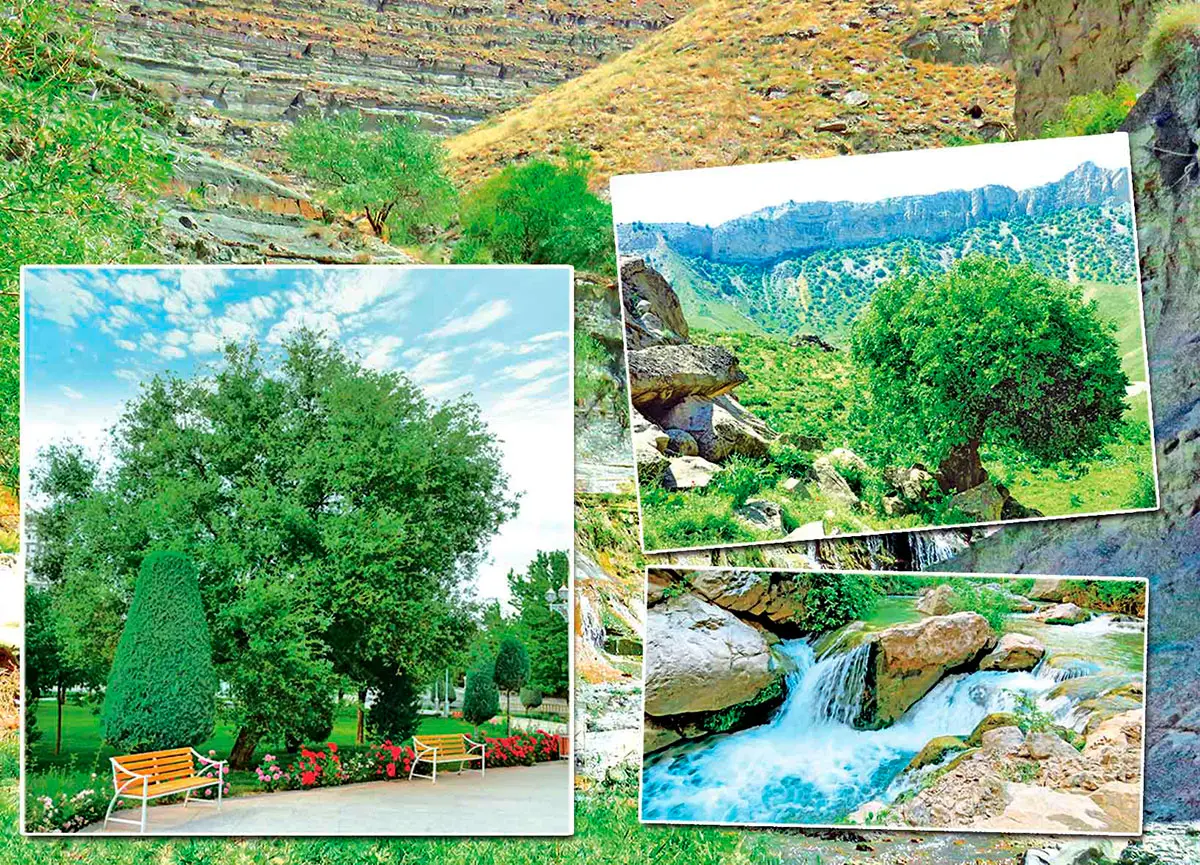
Specially protected natural areas are portions of the natural environment (lands, forests, waters, subsoil, and airspace), natural complexes, and individual objects possessing special conservation, scientific, cultural, educational, recreational, health related and aesthetic value. These areas are placed under special state protection for the purpose of preserving and restoring ecological balance, as well as the richness and diversity of natural resources and the beneficial properties of the natural environment.
The Law of Turkmenistan "On Specially Protected Natural Areas," adopted on March 31, 2012, regulates relations regarding the organization, management, protection, and use of specially protected natural areas that hold special conservation, scientific, cultural, aesthetic, recreational, and health related value by harmoniously aligning with the norms of the Land Code of Turkmenistan and other environmental laws, it complements and provides specific details regarding this sector. The Law consists of 13 chapters and 62 articles.
It should be noted that this Law is interconnected with the Laws of Turkmenistan "On Nature Protection," "On Sanatorium and Health Resort Activities," and "On the Protection of National Historical and Cultural Heritage Sites," as well as with the Land, Water, and Forest Codes- particularly regarding the use and protection of land, water resources, atmospheric air, forests, flora and fauna, and other natural resources within these natural areas.
Under this Law, specially protected natural areas are defined as portions of the natural environment (land, forests, water, subsoil, and airspace), natural complexes, and individual objects possessing special value, whether environmental, scientific, cultural, educational, recreational, health-related, or aesthetic that have been placed under special state protection to preserve and restore ecological balance, as well as the richness, diversity, and beneficial properties of natural resources and the natural environment.
Article 5 of the Law classifies specially protected natural areas into the following categories based on the significance and value of the natural complexes and objects involved:
1) specially protected natural areas of international significance, possessing outstanding universal value from ecological, scientific, cultural, aesthetic, and recreational perspectives, and which are included and proposed for inclusion in the UNESCO World Heritage List, the UNESCO World Network of Biosphere Reserves, and the international lists of the International Union for Conservation of Nature (IUCN);
2) specially protected natural areas of state significance, possessing special ecological, scientific, cultural, aesthetic, and recreational significance within Turkmenistan;
3) specially protected natural areas of local significance, possessing ecological, scientific, cultural, aesthetic, and recreational significance within the boundaries of a specific velayat, city with the right of velayat and state-level status, etrap, city with the right of etrap, city within an etrap, village and gengeshlik.
Depending on the objectives of their establishment and the nature of their protection regime, the following types of specially protected natural areas are distinguished: state nature reserves (Hazar, Badhyz, Kopetdag, Sunt-Hasardag, Amyderya, Kaplangyr, and Bereketli-Garagum); state biosphere reserves (Repetek); national nature parks; and state nature reserves; state natural monuments; natural areas designated for health and recreation; state botanical gardens; state zoological parks. The legislation of Turkmenistan may also provide for other types of specially protected natural areas. The categorization of specially protected natural areas is carried out in accordance with the legislation and international treaties of Turkmenistan.
State administration of specially protected natural areas is exercised by an authorized body, regulations for each such area are developed and approved by the Cabinet of Ministers of Turkmenistan. Specially protected natural areas are established either for an indefinite period or for a fixed term. In accordance with the land legislation of Turkmenistan, specially protected natural areas are granted for possession and use free of charge.
Upon the designation of buffer zones to ensure the protection regime of specially protected natural areas, activities that could negatively affect compliance with said protection regimes are prohibited within them. Accordingly, buffer zones must be established around state nature reserves and state biosphere reserves. Buffer zones may also be established around national nature parks and other specially protected natural areas.
The decision regarding the establishment, size, boundaries, and nature-use regime within the buffer zones of specially protected natural areas, depending on their category, is adopted by: the Cabinet of Ministers of Turkmenistan, upon the proposal of the authorized executive body for specially protected natural areas, for areas of international and state significance; and local executive authorities, in coordination with the authorized executive body for specially protected natural areas, for areas of local significance.
Legal acts of the President of Turkmenistan play a significant role in improving legislation regarding land protection. A Resolution of the President of Turkmenistan dated January 6, 2012, approved the "Procedure for Organizing Buffer Zones for Historical, Archaeological, Urban Planning, Architectural, and Monumental Art Monuments and Natural Landscape Objects." This document provides precise definitions for the terms "monument buffer zone," "construction regulation zone," and "protected natural landscape zone." The Resolution regulates the procedure for defining buffer zones for our monuments, especially, broadly speaking, the "boundaries of the monuments." Special areas designated to ensure the protection of monuments and their grounds constitute the buffer zones for monuments and natural landscape objects. Monument buffer zones are indicated on the spatial planning schemes of cities, etrap centers, and villages where monuments are located. A monument buffer zone is an area designated to ensure the preservation of the monument and its surrounding territory. A protected natural landscape zone is distinct from construction regulation zones, it is an area designated to preserve a valuable natural landscape in the nearby of a monument.
In accordance with paragraph 24 of the document, measures to protect the protected natural landscape involve restoring its historical appearance, removing trees related to it, objects, and structures, and restoring and preserving the vegetation characteristic of the area. Activities that do not require the construction of permanent structures and do not harm the natural landscape are also permitted within the protected natural landscape zone. In specific sections of this zone, mowing, livestock grazing, and agricultural cultivation are allowed. The area may also serve as an open space for recreation and the hosting of large-scale festive events. Thus, the establishment and operation of specially protected natural areas contribute to the preservation of Turkmenistan’s nature and foster public engagement, measures which are guaranteed by the country’s environmental protection legislation.
The state implements programs aimed at further enriching natural resources, including flora and fauna, carefully preserving its unique natural environment, and improving the region's ecological situation.
Initiatives and proposals put forward by Turkmenistan within the United Nations and other international organizations play a vital role in ensuring peace and security, as well as fostering multilateral cooperation to achieve the Sustainable Development Goals.
Turkmenistan acceded to the Convention on Biological Diversity on June 18, 1996. The Convention’s primary objectives include protecting biodiversity, specifically all living organisms at the genetic, species, and ecosystem levels, and ensuring the sustainable use of biodiversity components by nations, as well as the fair and equitable sharing of benefits arising from the use of genetic resources and the exchange of relevant technologies. A key task of the Convention is the dissemination of environmental, energy saving, and information technologies that reduce anthropogenic impact in developing countries. Turkmenistan’s biodiversity is closely linked to global natural systems and constitutes a national treasure shaped over millennia. The loss of biodiversity is one of the major environmental challenges of our time. It has been established that since 1600, 484 animal species and 654 plant species have gone extinct worldwide. Currently, more than 9,000 animal species and 7,000 plant species are listed in the International Union for Conservation of Nature’s Red List.
Turkmenistan consistently prioritizes participation in international conventions and the implementation of international legal norms and principles regarding environmental protection. Our country is a party to various international environmental conventions and agreements. The people of Turkmenistan fully understand the importance of nature conservation and actively participate in environmental protection initiatives; this demonstrates the effective implementation of national legislation and a growing culture of environmental awareness.
Overall, the country has established modern legislation governing the conservation of natural resources, their safe and rational use, the adoption of ecofriendly production technologies, and the assurance of environmental safety hazards. Compliance with the legal and organizational regulations governing specially protected natural areas is of great importance for the conservation of biodiversity.